Healthcare Services in Libya, 2022–2026
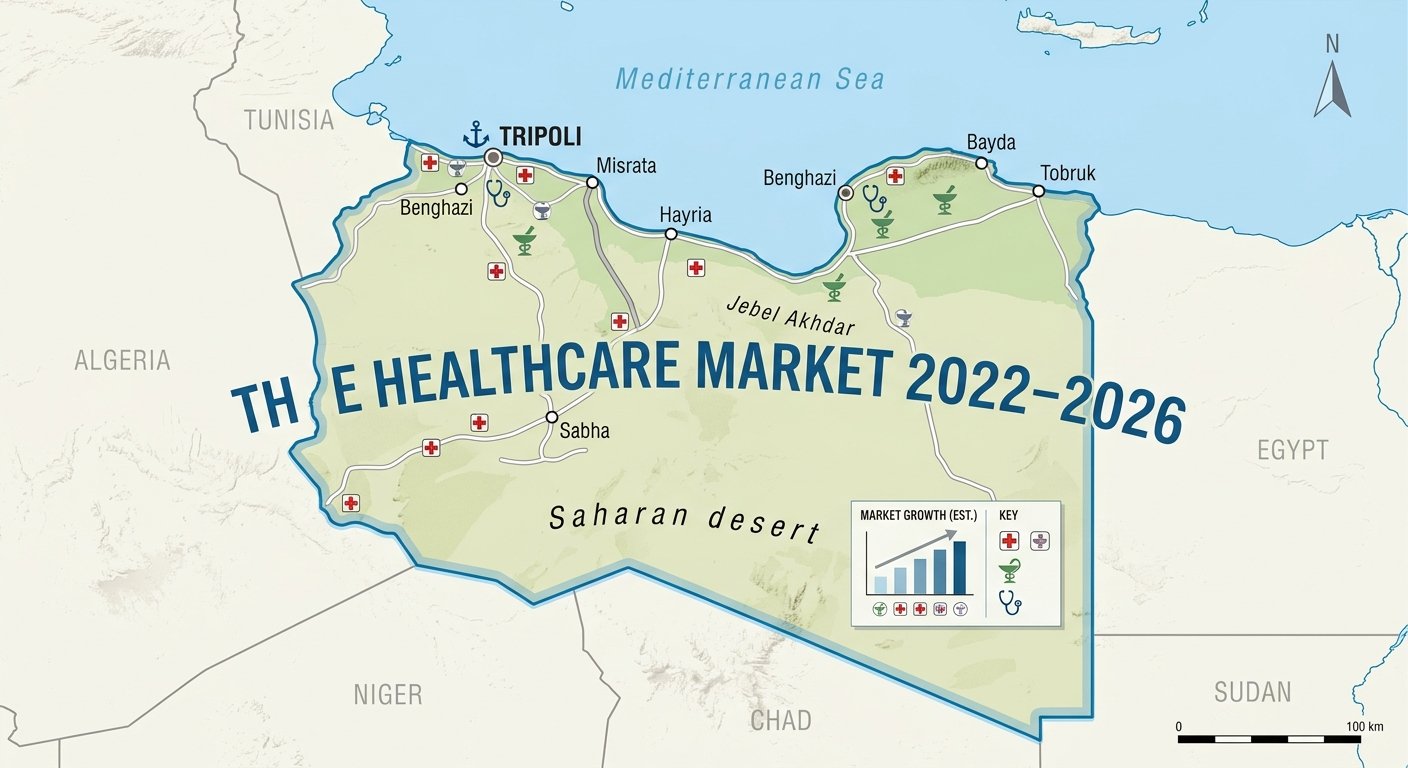
From Domestic Service Gaps to a Major Cross-Border Medical Care Market
Libya’s healthcare market between 2022 and 2026 can be understood through two parallel realities: the domestic healthcare system and the rapidly expanding cross-border healthcare market created by Libyan patients travelling abroad to obtain medical services.
The domestic system continues to provide essential primary, secondary and emergency services, but faces challenges related to specialized clinical capacity, medical technology, medicines, qualified personnel, maintenance and continuity of care.
At the same time, thousands of Libyan patients travel abroad when a required medical service is unavailable, delayed, insufficiently developed, or perceived to be available at a higher quality in another country.
The most important destinations are Tunisia, Egypt and Turkey, followed by Jordan, Germany and Italy.
Libya’s Therapeutic Services Support and Development Agency identifies Tunisia, Egypt, Jordan, Turkey, Germany and Italy among the foreign destinations used for medical treatment.
Approximately US$750 million–US$1.5 billion in direct and associated healthcare expenditure, based on available patient-volume, treatment-cost and foreign-provider-debt evidence. This is an analytical market estimate rather than an official Libyan government expenditure figure.
1. Understanding the Libyan Healthcare Market
Libya has a distinctive healthcare-market structure. Its oil-based economy gives the country the potential to finance substantial healthcare expenditure, while its relatively small population creates the possibility of significant healthcare expenditure per capita.
However, the central challenge is not simply the amount of money available for healthcare. The more fundamental issue is whether the country possesses sufficient clinical capacity, infrastructure, technology, specialists and healthcare-management systems to convert financial resources into accessible and high-quality medical services.
A healthcare system may possess hospitals, physicians and medical equipment while still experiencing significant service gaps when it cannot consistently provide advanced specialized care.
This is particularly relevant to:
- Advanced oncology
- Radiotherapy
- Complex cardiovascular procedures
- Cardiac surgery
- Advanced pediatric care
- Neurosurgery
- Organ transplantation
- Complex orthopedic surgery
- Fertility treatment
- Advanced diagnostic imaging
- Specialized laboratory diagnostics
- Rehabilitation
- Complex intensive care
- Rare-disease management
When these services are not consistently available domestically, healthcare expenditure moves across borders.
When domestic healthcare capacity does not match patient demand, healthcare expenditure does not disappear—it moves across borders.
2. Healthcare Service Provision Inside Libya
Between 2022 and 2026, Libya continued to depend heavily on its public healthcare infrastructure while private healthcare providers increasingly supplemented the system.
Primary Healthcare
Primary healthcare includes:
- Family medicine
- General practice
- Maternal and child health
- Vaccination
- Chronic disease management
- Basic laboratory services
- Basic diagnostic imaging
- Preventive healthcare
These services are particularly important because Libya, like other countries in the region, faces a growing need for continuous management of chronic diseases rather than episodic treatment.
Secondary Healthcare
Secondary services include:
- General surgery
- Internal medicine
- Obstetrics and gynecology
- Pediatrics
- Emergency medicine
- General cardiology
- Orthopedics
- Ophthalmology
- ENT
- Urology
- Diagnostic imaging
- Laboratory medicine
Private clinics and hospitals play an increasingly important role in delivering these services, particularly in major population centers.
Tertiary and Quaternary Healthcare
The greatest service gap is generally found in highly specialized tertiary and quaternary medicine.
Advanced medical services require:
- Sophisticated medical equipment
- Experienced multidisciplinary teams
- Specialized nurses
- Advanced pharmaceuticals
- Continuous professional training
- High-volume clinical activity
- Clinical protocols
- Quality assurance systems
- Advanced intensive care
Where these elements are not consistently available, patients are more likely to be referred abroad.
3. The Real Healthcare Export: Libyan Patients
The most important feature of the Libyan healthcare market is therefore not only what happens inside Libyan hospitals.
It is what happens after the patient leaves Libya.
A typical cross-border medical journey may include:
- Initial physician consultation in Libya
- Diagnostic imaging or laboratory testing
- Specialist referral
- Government authorization or private financing
- International travel
- Admission to a foreign hospital
- Surgery or medical treatment
- Accommodation for the patient
- Accommodation for accompanying relatives
- Post-treatment follow-up
- Return travel
- Additional treatment when required
The economic value of medical travel is therefore significantly larger than the hospital invoice alone.
4. Why Do Libyans Travel Abroad for Healthcare?
4.1 Availability of Specialized Services
The most fundamental reason for international treatment is the lack of consistent access to some specialized services within Libya.
4.2 Advanced Medical Technology
Foreign hospitals may offer access to:
- Advanced radiotherapy
- Robotic surgery
- PET-CT
- Advanced cardiac catheterization
- Electrophysiology
- Advanced fertility technology
- Molecular oncology
- Specialized intensive care
- Advanced neurosurgery
4.3 Specialist Availability
Patients may seek specialists with high procedure volumes, international experience and access to multidisciplinary teams.
4.4 Continuity of Care
Complex diseases often require a complete treatment pathway rather than a single medical procedure. Patients may therefore select a healthcare system capable of providing diagnosis, treatment, surgery, rehabilitation and follow-up under one coordinated model.
4.5 Perception of Quality
Patient confidence is one of the strongest drivers of international medical travel.
Even when a particular service exists in Libya, patients may prefer foreign providers because they perceive them as offering:
- Better clinical outcomes
- More experienced physicians
- Advanced technology
- Stronger accreditation
- Better nursing services
- More reliable medicines
- Better postoperative care
4.6 Geographic and Cultural Factors
Tunisia and Egypt have major advantages because of their geographical proximity, direct transportation links, cultural familiarity, Arabic language and established relationships with Libyan patients.
5. Tunisia: Libya’s Largest Medical Treatment Destination
Tunisia is arguably the most strategically important foreign healthcare market for Libya.
Its advantages include:
- Geographical proximity
- Short travel times
- Extensive private healthcare infrastructure
- Established Libyan patient base
- Competitive treatment prices
- Strong private hospital sector
- Established medical tourism infrastructure
The oncology data demonstrates Tunisia’s importance.
In 2023, approximately 11,768 Libyan oncology patients were reported to have been treated in Tunisia.
This was substantially higher than the number reported in any other destination.
In early 2024, another Libyan government snapshot reported approximately 4,416 oncology patients in Tunisia, compared with 970 in Egypt, 186 in Turkey and 48 in Germany.
Tunisia therefore represents the first major external extension of Libya’s healthcare system.
6. Egypt: A Major Healthcare Destination
Egypt represents another critical destination for Libyan patients.
Egypt’s competitive advantages include a very large healthcare ecosystem comprising:
- University hospitals
- Private hospitals
- Specialized medical centers
- Oncology centers
- Cardiac centers
- Fertility centers
- Orthopedic hospitals
- Neurosurgery centers
- Pediatric services
- Rehabilitation facilities
- Laboratory networks
- Diagnostic imaging networks
In 2023, approximately 2,292 Libyan oncology patients were reported to be receiving treatment in Egypt.
Egypt is particularly attractive to patients from eastern Libya because of geographical proximity and regional connectivity.
The continuing presence of Libyan healthcare-management structures in Cairo and discussions regarding contracts with Egyptian hospitals demonstrate that Egypt is not simply an incidental destination.
Strategic Position of Egypt:Egypt has the potential to become one of the largest regional healthcare hubs for Libyan patients because of its combination of scale, specialist availability, medical technology, competitive pricing and geographic proximity.
7. Turkey: The Premium Regional Alternative
Turkey has emerged as an important destination for Libyan patients seeking sophisticated private healthcare.
Its strengths include:
- Advanced hospitals
- Internationally oriented healthcare providers
- Modern medical technology
- Cardiovascular medicine
- Oncology
- Transplantation
- Neurosurgery
- Orthopedics
- Fertility treatment
- Complex surgery
- Intensive care
In 2023, approximately 1,187 Libyan oncology patients were reported in Turkey.
Turkey occupies a different strategic position from Tunisia and Egypt.
Tunisia and Egypt are primarily proximity-and-access markets, while Turkey increasingly represents a technology-and-specialization market.
8. Jordan
Jordan is another important destination identified by Libyan healthcare authorities.
Its strengths include:
- Specialist hospitals
- Oncology
- Cardiology
- Orthopedics
- Rehabilitation
- Pediatric medicine
- Private healthcare
- Arabic-language medical services
Jordan has historically served patients from across the Arab world and continues to occupy an important position in the regional medical tourism market.
9. Germany and Italy
European destinations serve a smaller but strategically important segment of Libyan patients.
These destinations are generally associated with:
- Highly complex cases
- Difficult diagnoses
- Specialized surgery
- Rare diseases
- Advanced oncology
- University medicine
- Advanced second opinions
- Highly specialized technology
The smaller patient numbers compared with Tunisia, Egypt and Turkey reflect the higher cost and logistical complexity of European treatment.
10. The Most Popular Countries for Libyan Medical Treatment
| Rank | Country | Main Competitive Advantage | Relative Importance |
|---|---|---|---|
| 1 | Tunisia | Proximity, private healthcare, oncology and affordability | Very High |
| 2 | Egypt | Large healthcare ecosystem, specialists and affordability | Very High |
| 3 | Turkey | Advanced technology and complex care | High |
| 4 | Jordan | Specialist Arab healthcare market | Moderate |
| 5 | Germany | Highly complex and advanced medicine | Selective |
| 6 | Italy | European specialist care | Selective |
11. Oncology: A Major Driver of Medical Travel
Cancer treatment is one of the clearest illustrations of Libya’s external healthcare dependence.
In 2023, approximately 16,000 Libyan oncology patients were reportedly referred abroad.
| Destination | Reported Oncology Patients |
|---|---|
| Tunisia | 11,768 |
| Egypt | 2,292 |
| Turkey | 1,187 |
| Italy | 52 |
| Germany | 48 |
Reported treatment costs ranged from approximately US$2,000 to US$50,000 per patient, depending on the disease and treatment requirements.
This range demonstrates why medical-travel expenditure cannot be calculated simply by multiplying patient numbers by a single average hospital bill.
12. The Cost of Medical Treatment Abroad
There is no comprehensive publicly available annual national account covering all Libyan healthcare expenditure incurred abroad between 2022 and 2026.
This is an important limitation when attempting to calculate the size of the market.
Official expenditure may include:
- Government-funded patients
- Approved treatment cases
- Foreign healthcare office payments
- Embassy medical-office payments
- Hospital contracts
- Direct deposits to foreign providers
However, it may not fully capture:
- Privately financed patients
- Cash payments
- Companion expenditure
- Hotels
- Transportation
- Air ambulance
- Pharmaceutical purchases
- Second opinions
- Follow-up treatment
- Unregistered medical travel
Therefore, any national market estimate should be presented as a range rather than a single definitive number.
13. Estimated Medical Spending Abroad, 2022–2026
Based on available evidence from patient volumes, treatment costs, historical expenditure estimates and foreign-provider liabilities, the following represents a reasonable analytical scenario.
| Year | Estimated Direct & Associated Spending |
|---|---|
| 2022 | US$150–250 million |
| 2023 | US$175–300 million |
| 2024 | US$175–325 million |
| 2025 | US$150–300 million |
| 2026E | US$150–325 million |
| 2022–2026E | US$800 million–US$1.50 billion |
Important Market-Research Note:The figures above should be interpreted as a market-sizing estimate, not an official Libyan national health-expenditure statistic. The absence of a comprehensive public annual account for all international medical expenditure creates a significant estimation range.
A more conservative estimate focused primarily on direct medical treatment would be approximately US$750 million–US$1.25 billion during 2022–2026.
When accommodation, transportation, companions and other associated expenses are included, the broader economic value could approach US$1.0–1.5 billion.
14. Evidence of the Financial Scale
The financial pressure can also be observed through Libya’s relationships with foreign healthcare providers.
In 2024, the head of Tunisia’s National Union Chamber of Private Clinics reported that Libya owed approximately US$111 million to 60 Tunisian private clinics for the treatment of Libyan patients.
Other reports have identified substantial outstanding liabilities associated with treatment in Tunisia and Turkey.
This highlights a critical point:
Foreign healthcare spending is not only a patient-flow issue; it is also a public-finance, healthcare-procurement and claims-management issue.
15. Government-Funded Versus Private Medical Travel
Government-Funded Treatment
Government-funded patients may receive treatment through:
- Treatment authorization
- Foreign health offices
- Embassy medical offices
- Hospital contracts
- Direct deposits
- Formal referral mechanisms
Private Medical Travel
A second category consists of patients who finance their treatment privately.
These patients may travel because they:
- Want faster treatment
- Prefer a particular physician
- Require a service unavailable locally
- Want a second opinion
- Have family relationships abroad
- Prefer a specific foreign hospital
- Can afford private international healthcare
The private market is difficult to measure and therefore means that official government figures almost certainly represent only part of total Libyan medical travel.
16. The Hidden Cost: The Patient Is Not Traveling Alone
Medical-travel economics should never be calculated solely from the hospital invoice.
A Libyan patient may travel with a spouse, parent, child, sibling or caregiver.
The total economic cost may therefore include:
- Medical treatment
- Accommodation
- Food
- Transportation
- Flights
- Visa and documentation costs
- Companion expenses
- Medical assistance
- Post-treatment care
- Repeat travel
The actual economic leakage from Libya can therefore be considerably greater than the amount paid directly to a foreign hospital.
17. Tunisia Versus Egypt Versus Turkey
| Factor | Tunisia | Egypt | Turkey |
|---|---|---|---|
| Geographic proximity | Excellent | Excellent | Good |
| Cost competitiveness | High | Very High | Moderate |
| Oncology | Very Strong | Strong | Very Strong |
| Cardiology | Strong | Very Strong | Very Strong |
| Complex surgery | Strong | Very Strong | Very Strong |
| Fertility | Strong | Very Strong | Very Strong |
| Medical technology | Strong | Strong / Very Strong | Very Strong |
| Arabic environment | Moderate | Excellent | Moderate |
| Existing Libyan patient base | Very High | Very High | High |
| Premium positioning | Moderate | Moderate–High | High |
18. From Medical Travel to Cross-Border Healthcare Management
The future market should not be viewed simply as:
Libyan Patient → Foreign Hospital
A more sophisticated model is:
Libyan Payer → Healthcare Coordinator → Foreign Specialist → Foreign Hospital → Libyan Follow-Up Provider
This creates opportunities for:
- Medical tourism management companies
- International patient departments
- Healthcare insurance
- Third-party administrators
- Medical assistance companies
- Second-opinion platforms
- Telemedicine
- Cross-border electronic medical records
- Medical transportation
- Patient accommodation
- International healthcare contracting
19. The Opportunity to Localize Treatment
The Libyan government has increasingly promoted the localization of treatment by developing domestic capacity and reducing dependence on foreign treatment.
The strategy is particularly relevant for services that have:
- High patient volumes
- High annual expenditure abroad
- Strong clinical demand
- Potential for domestic development
- Available international expertise
Recent examples of international medical teams working inside Libya demonstrate that the country can potentially import expertise instead of exporting patients.
Strategic Principle
Instead of exporting the patient, Libya can import the expertise.
20. The Five-Year Strategic Question
The key question for Libya between 2026 and 2030 should not simply be:
“How can Libya stop patients from travelling abroad?”
A more strategic question is:
“Which treatments should Libya localize, which should remain regional, and which should remain international?”
Not every complex treatment needs to be developed domestically.
Libya should prioritize services according to:
- Patient volume
- Clinical urgency
- Expenditure abroad
- Feasibility of localization
- Availability of specialists
- Technology requirements
- Expected return on investment
- Quality and safety
- Long-term sustainability
- Potential for public-private partnership
21. Highest-Priority Localization Opportunities
1. Oncology
- Chemotherapy
- Radiotherapy
- Oncology surgery
- PET-CT
- Molecular diagnostics
- Targeted therapy
- Multidisciplinary tumor boards
2. Cardiovascular Care
- Cardiac catheterization
- PCI
- Electrophysiology
- Cardiac surgery
- Vascular surgery
- Advanced cardiac imaging
3. Fertility
- IVF
- ICSI
- Reproductive endocrinology
- Advanced embryology laboratories
4. Advanced Diagnostics
- PET-CT
- Advanced MRI
- Molecular pathology
- Genetic testing
- Specialized laboratory diagnostics
5. Orthopedics
- Joint replacement
- Spine surgery
- Sports medicine
- Complex trauma
6. Neurosurgery
- Brain tumors
- Vascular neurosurgery
- Complex spine surgery
- Neurointervention
7. Pediatric Specialties
- Pediatric cardiac surgery
- Pediatric oncology
- Neonatal intensive care
- Pediatric surgery
22. A New Libyan Healthcare Business Model
Libya could potentially transform part of its medical-travel expenditure into domestic healthcare investment.
For example, if annual expenditure abroad is assumed at US$200–300 million, redirecting only 30% toward domestic healthcare development would represent approximately:
US$60–90 Million
Potential annual healthcare investment
Over five years, this could represent approximately:
US$300–450 Million
Potential cumulative investment
Such capital could support:
- Specialized hospitals
- Oncology centers
- Cardiac centers
- Diagnostic networks
- Medical laboratories
- Rehabilitation facilities
- Training centers
- Medical technology
- Digital health infrastructure
The objective should not be to eliminate international treatment. It should be to optimize where the money is spent.
23. International Treatment Will Remain Necessary
Even a highly developed Libyan healthcare system will continue to require international referrals.
International treatment will remain appropriate for:
- Rare diseases
- Highly complex transplantation
- Experimental therapies
- Selected pediatric conditions
- Unusual cancers
- Highly specialized neurosurgery
- Complex genetic disorders
- Advanced clinical trials
The strategic objective should therefore be:
Selective international referral — not uncontrolled medical expenditure abroad.
24. The Role of Insurance
Insurance could fundamentally change Libya’s healthcare-financing model.
A mature healthcare-financing system could establish two integrated networks.
Domestic Network
Primary Care → Specialist Care → Hospital Care → Advanced Diagnostics
International Network
Second Opinion → Complex Surgery → Selected Oncology → Rare Disease → Advanced Tertiary Care
The payer could negotiate:
- Bundled prices
- Case rates
- DRG-type payment mechanisms
- Annual provider contracts
- Negotiated hospital tariffs
- Clinical quality requirements
- Outcome reporting
Instead of paying uncontrolled foreign hospital bills, Libya could establish structured International Provider Networks with pre-negotiated prices and defined clinical pathways.
25. The Potential Role of TPAs
Third-Party Administrators could become particularly important in managing cross-border healthcare.
A TPA could manage:
- Patient eligibility
- Medical necessity
- Prior authorization
- Hospital selection
- Travel arrangements
- Admission
- Treatment monitoring
- Billing
- Claims management
- Discharge
- Follow-up
- Medical records
This could significantly reduce financial leakage and improve control over international healthcare expenditure.
The system could move from:
“Send the patient abroad and pay the bill.”
to:
“Manage the entire international episode of care.”
26. The Strategic Opportunity for Egypt
For Egypt, the Libyan healthcare market represents an important cross-border healthcare opportunity.
Egypt already possesses:
- Large hospital capacity
- University medicine
- Private hospitals
- Specialist physicians
- Diagnostic networks
- Pharmaceutical manufacturing
- Medical laboratories
- Rehabilitation services
- Fertility services
- Oncology services
- Cardiac services
The Libyan patient base provides an opportunity to establish dedicated Libya Healthcare Programs within Egyptian hospitals.
Such programs could provide:
- Dedicated Libyan patient coordinators
- International patient departments
- Bundled treatment prices
- Dedicated appointment channels
- Accommodation packages
- Airport transfers
- Medical-record coordination
- Post-discharge follow-up in Libya
27. The Strategic Opportunity for Tunisia
Tunisia is particularly well positioned to remain Libya’s leading cross-border healthcare partner because of geography and its established patient flows.
The next stage should move beyond individual patients toward:
Institution-to-Institution Healthcare Partnerships
- Hospital networks
- Oncology centers
- Rehabilitation centers
- Specialized clinics
- Insurance companies
- TPAs
- Telemedicine providers
28. The Strategic Opportunity for Turkey
Turkey can continue positioning itself as a premium destination for complex and technology-intensive healthcare.
Its major opportunities include:
- Advanced oncology
- Cardiovascular medicine
- Transplantation
- Neurosurgery
- Orthopedics
- Fertility
- Robotic surgery
- Advanced diagnostics
29. Market Outlook: 2026–2030
The Libyan healthcare market is likely to develop along three simultaneous paths.
PATH 1
Domestic Healthcare Expansion
Investment in hospitals, diagnostics, oncology, cardiovascular care, fertility and specialized surgery.
PATH 2
Controlled International Referral
Patients requiring highly complex services will continue to travel abroad through managed referral pathways.
PATH 3
Cross-Border Partnerships
Foreign hospitals will increasingly cooperate directly with Libyan healthcare institutions.
This creates a hybrid healthcare model:
Local Healthcare + Regional Healthcare + International Healthcare
30. Key Market Indicators to Monitor
Investors, healthcare operators, insurers and policymakers should monitor:
- Number of Libyan patients treated abroad
- Expenditure by destination
- Expenditure by specialty
- Government versus private funding
- Average cost per case
- Average length of stay
- Companion costs
- Outstanding foreign-provider bills
- Number of foreign-provider contracts
- Number of procedures localized
- Domestic treatment success rates
- Medical evacuation volume
- Oncology referrals
- Cardiac referrals
- Fertility referrals
- Orthopedic referrals
Conclusion
The Libyan healthcare market between 2022 and 2026 is best understood as a dual-market healthcare economy.
One market exists inside Libya.
The second market exists outside Libya and is supplied by foreign hospitals treating Libyan citizens.
Tunisia, Egypt and Turkey dominate this external market, while Jordan, Germany and Italy serve more specialized segments.
The available evidence demonstrates the scale of this phenomenon. Thousands of Libyan oncology patients alone have been treated abroad, with Tunisia accounting for the largest share. In 2023, approximately 16,000 oncology patients were reported to have been referred abroad, while treatment costs reportedly ranged from approximately US$2,000 to US$50,000 per patient.
Foreign-provider debts further demonstrate the financial significance of the market, including reported liabilities to Tunisian private clinics.
The Estimated Market
US$750 Million – US$1.5 Billion
Estimated direct and associated healthcare expenditure abroad during 2022–2026.
This estimate should be treated as an analytical market-sizing range rather than an official national expenditure account because Libya does not currently publish a comprehensive annual account covering every category of international medical spending.
The strategic opportunity for Libya is therefore enormous.
The country does not necessarily need to eliminate medical travel.
It needs to manage it strategically.
The future Libyan healthcare system should determine which services must be developed domestically, which should be delivered through regional partnerships with Tunisia, Egypt and Turkey, and which complex cases should continue to be referred to Europe and other advanced healthcare markets.
The Strategic Transformation
From “patients travelling abroad” to “a connected Libyan healthcare ecosystem.”
Libya can transform medical travel from an uncontrolled financial leakage into a managed component of national healthcare strategy through domestic investment, international provider networks, insurance, TPA management, telemedicine, medical partnerships and selective localization of advanced services.
The ultimate objective is not to stop international healthcare.
It is to ensure that every Libyan patient receives the right treatment, from the right provider, at the right cost, in the right location.