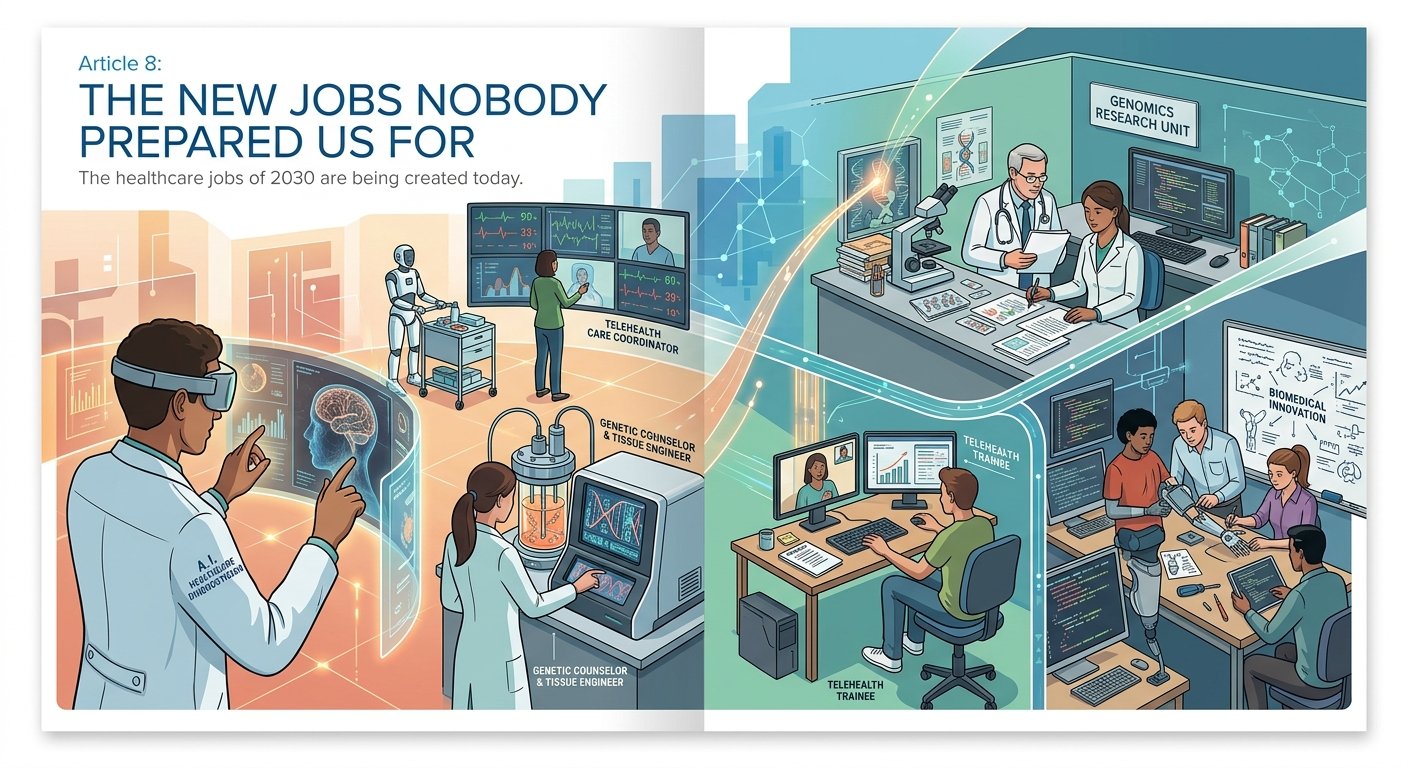
ARTICLE 8 The New Jobs Nobody Prepared Us For The healthcare jobs of 2030 are being created today.
Healthcare’s talent crisis is not what you think it is. Yes, we need more nurses. Yes, we need more physicians. But the most consequential shortage facing health systems over the next decade is not clinical headcount. It is structural competence—the ability to design, integrate, govern, and scale technology within the clinical enterprise.
The jobs that will determine which health systems thrive and which merely survive do not yet exist in most organizational charts. They are not taught in medical schools. They are not certified by traditional boards. They are being forged at the intersection of clinical practice, systems engineering, data science, and organizational strategy.
By 2030, every major health system will employ professionals whose titles would be unrecognizable today. The question is not whether these roles will emerge. The question is whether your organization will hire them before your competitors do.
The healthcare jobs of 2030 are being created today. The organizations that define them first will own the next decade.
The Emerging Professional Landscape
Below are ten roles that will move from experimental hires to mission-critical functions. Each represents a gap in the current healthcare operating model. Each carries direct implications for patient outcomes, operational efficiency, and competitive positioning.
Clinical Systems Engineer
The mandate: Design and optimize the socio-technical systems that govern patient care. They do not install software—they architect how humans, devices, data, and protocols interact at the bedside, in the operating room, and across the continuum of care.
Business impact: Reduces operational friction, eliminates workflow debt, and ensures technology investments translate into measurable clinical throughput.
Clinical AI Architect
The mandate: Own the end-to-end lifecycle of clinical AI deployment—from model selection and integration to governance, monitoring, and sunsetting. They ensure algorithms do not operate in organizational vacuums.
Business impact: Prevents AI project failure, protects against liability, and maximizes return on algorithmic investment.